

-------Mcoti flexible thermal pads and non-silicone thermal gels
Optical modules are core components in optical communication systems that convert optical and electrical signals. They are widely used in data centers, communication networks, cloud computing, 5G/6G base stations, and other scenarios. Their core function is to convert electrical signals into optical signals (transmitter), transmit them through optical transmission media such as optical fiber, and then convert them back into electrical signals (receiver), enabling long-distance, high-speed information transmission. Optical module packaging involves encapsulating components such as the transmitter optical module (TOSA), receiver optical module (ROSA), and printed circuit board assembly (PCBA) to achieve the conversion and transmission of optical and electrical signals.
With the rapid development of the digital economy, optical modules are evolving towards higher speeds, lower power consumption, smaller size, and lower costs. As the core engine of optical communications, optical modules' technological advancements are directly driving improvements in global information transmission efficiency and are essential components in the digital age.
Heat dissipation space limitations under the trend of miniaturization
The conflict between packaging density and heat dissipation
The QSFP-DD package measures only 18mm × 89mm × 8.5mm, yet must dissipate over 20W of heat. This compresses the heat sink fin height to less than 3mm, reducing the air convection heat transfer coefficient to less than 50W/m²·K at a wind speed of 2m/s.
Thermal Resistance of the 3D Stacked Structure
The vertical stacking of the co-packaged optical engine and electronic chip lengthens the heat flow path. The thermal resistance of the TIM interface between each layer contributes over 60% of the total thermal resistance. The junction-to-ambient thermal resistance (Rja) of the 1.6T module must break through the industry bottleneck of 1.5°CW.
Airtightness requirements restrict heat dissipation solutions
The TO-CAN hermetic packaging of optical modules limits the use of high-efficiency heat dissipation media such as phase change materials (PCMs) and liquid metals. Traditional copper microchannel cold plates face challenges in corrosion resistance and pressure resistance.
Application of thermal conductive materials inside optical modules
Technical requirements for thermal interface materials
- Low contact thermal resistance: The material's flexibility or fluidity (e.g., thermally conductive gel) fills interfacial gaps, reducing thermal resistance.
- Good wettability: The material's surface tension must be compatible with different interfacial materials, such as metals (e.g., aluminum alloy housings), ceramics (e.g., laser packages), and PCBs, ensuring a tight fit without residual bubbles.
- Appropriate hardness and compressibility: The material can fill gaps without damaging delicate components (e.g., fiber optic connectors and solder joints) due to excessive compression.
- Low volatility and non-corrosiveness: The material has an extremely low volatile organic compound (VOC) content and is free of corrosive components such as silicone migrants and halogens, preventing contamination of optical components (e.g., lenses and fiber optic connectors) or corrosion of PCB solder joints.
Recommended Mecotech Thermal Conductive Materials
Flexible Thermal Pads: N-SP88 Series
Thermal conductivity reaches 10.0 W/m·K and maintains excellent thermal conductivity even under low pressure. This product also features low volatility, making it suitable for use in areas sensitive to low-molecular-weight substances.
- Silicone Soft Thermal Pads
- Thermal conductivity reaches up to 10 W/m·K
- Excellent electrical insulation performance: Dielectric strength ≥ 10kV/mm
- Effectively compensates for component flatness deviations
- Suitable for pressure-sensitive components
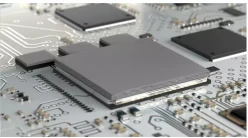
Non-Silicone Thermal Gel: 8745NS
Non-silicone materials do not release siloxane, which can contaminate components. Siloxane deposition can cause circuit corrosion and increased contact resistance. Non-silicone gel eliminates silicone contamination, ensuring long-term reliability.
- High thermal conductivity: 4.5 W/m·K
- Low thermal resistance: 0.21°C.cm²
- Excellent vertical stability after assembly and aging: No significant change
-High temperature and humidity 1000 hours @ 85°C/85% RH
-High temperature baking 1000 hours @ 125°C
- Excellent thermal resistance consistency after aging:
-High temperature and humidity 1000 hours @ 85°C/85% RH
-High temperature baking 1000 hours @ 125°C
- Temperature shock 1000 hours @ -40°C to 85°C
- Low compressive stress
- Low oil seepage: No oil seepage was observed after baking at room temperature, 85°C, and 100°C for 24 hours.


