

Insulated Silicon Carbide Schottky Diode
Recently, MCOTI has developed a thermally conductive insulating coating for metal heat sink frames. This solution can replace thermal grease and ceramic sheets, eliminating the need for a separate ceramic sheet for insulation and thermal conductivity. By simplifying the production process, it enhances manufacturing quality and improves the long-term reliability of the entire device, effectively addressing key industry challenges.
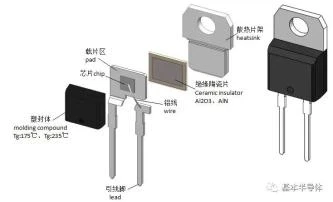
Simplified Production Process & Reduced Labor Time
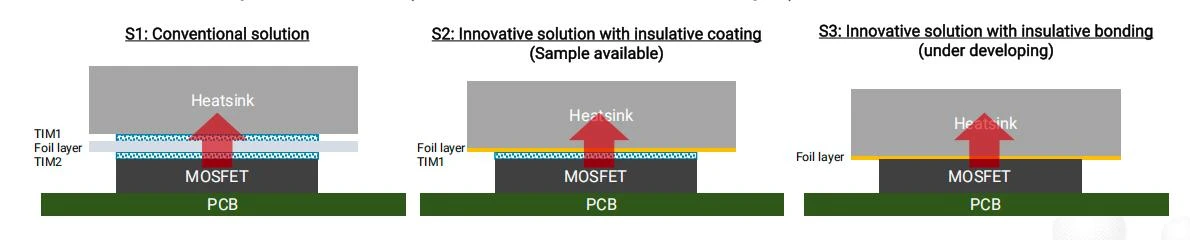
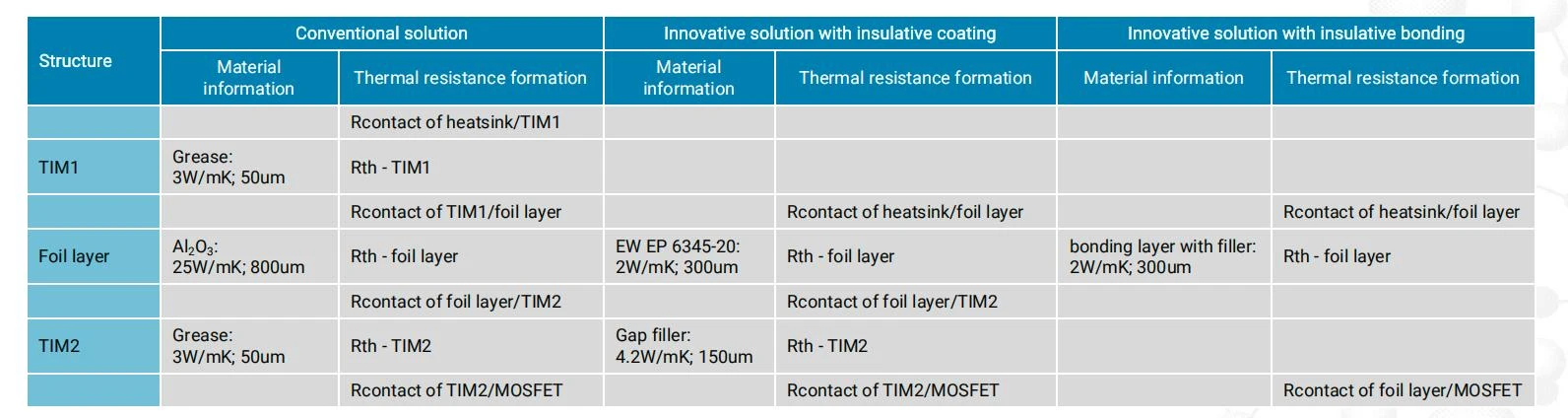
By integrating both thermal conductivity and insulation directly onto the heat sink surface, the production process is simplified, reducing labor time. For example, the traditional ceramic pad process requires five steps: applying thermal grease to the back of the ceramic pad, pressing the heat sink, applying thermal grease to the device's back, pressing the ceramic pad, and installing the insulating sleeve before securing it to the heat sink. In contrast, with the thermally conductive insulating coating, only three steps are needed: spraying the coating onto the heat sink, applying thermal gel, pressing the heat sink, and securing it with screws.
Improved Production Quality & Long-Term Reliability
This solution enhances power product manufacturing quality. Traditional ceramic sheets are brittle, leading to increased labor costs, longer processing time, and a higher likelihood of dielectric withstand testing failures, ultimately affecting production yield. Additionally, to prevent breakage, ceramic pads must be made thicker, which increases thermal resistance.
The thermally conductive insulating coating improves the long-term reliability of the entire system by eliminating weak points caused by insulators. Traditional insulators have poor reliability, degrade under prolonged high temperatures, and are prone to electrical creepage due to dust contamination, especially because of their thin structure. This coating-based solution mitigates these risks, ensuring greater stability and durability.


